
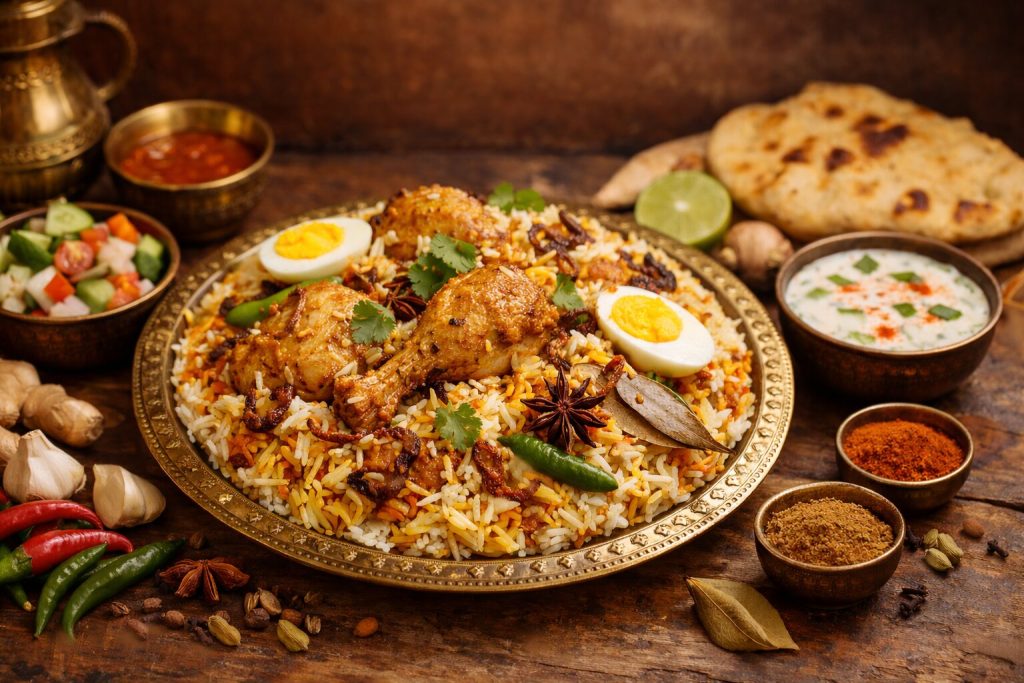
Biryani is not just food for Bangladeshi people. It is an emotion, a feeling that carries countless memories. This dish touches the heart in a way few others can. It is the aroma that greets you the moment you walk into a wedding. It is the pot your mother guards carefully while everyone hovers nearby, asking, “Is it ready yet?” It is the dish that can turn an ordinary Friday into something special.
But where did this magnificent dish come from?
The word “biryani” comes from the Persian term birian, meaning “fried before cooking.” It refers to the process where rice is fried in ghee before being cooked. Although its roots lie in Persian culinary traditions, biryani truly flourished in the royal kitchens of the Indian subcontinent. Over time, it became a beautiful fusion of Persian, Mughal, and regional Indian cooking techniques. With the influence of the Mughals and the rich traditions of places like Lucknow and Persia, biryani eventually found its way to our beloved Bangladesh, where it became more than just a dish. It became a part of our culture, our celebrations, and our identity.
Table of Contents
ToggleWhat Makes Bangladeshi Biryani Different
Most people outside Bangladesh associate Biryani with long-grain Basmati rice. Our version is different. We traditionally use Chinigura rice, which is tiny, pearl-like grains with a faintly sweet, floral scent. Because the grains are small, they absorb the chicken juices far better than long rice does. Every bite carries the flavor of the whole pot.
We also add things you will not find in other regional styles: Kewra water for that unmistakable “wedding” fragrance, dried plums (alo bukhara) that burst with a little sourness mid-bite, and a generous hand with ghee. The result is not fiery. It is deep, creamy, and aromatic, the kind of food that makes you go quiet for a few minutes.
Step 1: Marinate the Chicken
Wash and dry the chicken. Make a few cuts in each piece so the spices actually get inside, not just sit on the surface.
Mix your yogurt, ginger paste, garlic paste, onion paste, and half the spice blend in a large bowl. Add the chicken and get your hands in there. Coat every piece properly.
Now let it sit. At a minimum, one hour. Overnight in the fridge is better. The yogurt does real work here. The acidity breaks down the muscle fibers, and you end up with chicken that is tender all the way through, not just on the outside.
Step 2: Fry the Onions (Beresta)
Slice 2 large onions into thin, even rings. Heat oil and a little ghee in a wide pan. Fry on medium heat, stirring constantly.
Here is the critical moment: pull them out when they are light golden brown. Not dark brown. Not crispy yet. They will continue cooking for about a minute after you remove them from the oil, and that is when they reach that perfect, nutty sweetness. Spread them on a plate and let them cool.
Step 3: Cook the Chicken
In the same oil, add your marinated chicken on high heat. The onion-flavored oil left in the pan is full of flavor, so do not discard it. Brown the outside for a few minutes. Then lower the heat, add the dried plums and the rest of your spice blend, and cover the pot. The chicken will release its own liquid. You do not need to add water. Let it cook low and slow until it is nearly done and surrounded by a thick, intensely flavored gravy. That gravy is going to flavor the rice from below, so do not drain it or thin it out.
Step 4: Cook the Rice
Wash the rice until the water runs clear. Soak it for 15 minutes, then drain. Bring a large pot of water to a rolling boil. Add enough salt that it actually tastes salty, the way good pasta water does. Add a bay leaf and a cinnamon stick. Then add the rice.
Set a timer. Five to seven minutes maximum. You want the rice about 70 percent cooked. The outside should be soft, but if you bite a grain, the center should still have a tiny bit of resistance. It will finish cooking during the steam stage. If you cook it fully now, you will end up with mush later. When in doubt, pull it a minute early. Drain immediately and spread the rice out on a tray so it stops cooking.
Step 5: Layer It
This is the moment everything comes together. Use a large, heavy-bottomed pot. Start with the chicken and all its gravy at the bottom. Scatter some of your crispy onions and a few whole green chilies over the meat. Then pile the semi-cooked rice on top, loosely, not packed down. The steam needs to move through it.
Drizzle the saffron milk over the rice in a slow circle. Add spoonfuls of ghee on top. Then finish with the Kewra water. That last step is what makes it smell like a celebration.
Step 6: The Dum (Final Steam)
Cover the pot with a tight lid. If your lid does not seal well, lay a piece of aluminum foil across the top first, then put the lid on. No steam should escape.
Put it on the absolute lowest heat your stove can manage. If you are nervous about the bottom burning, slide a flat tawa or pan underneath the pot. Let it steam for 20 to 25 minutes.
When the timer goes off, do not open the lid. Turn off the heat and let it rest for another 15 minutes. I know it is hard. The smell will be unbearable. But this resting time is when the rice finishes perfectly, and the whole pot becomes one unified dish instead of separate components sitting on top of each other.
Special Tips for You
Good ghee matters. You can feel the difference the moment you lift the lid. Do not substitute it with butter or skip it to save calories. This is biryani, and it deserves the real thing.
The pot matters too. Thin pots tend to burn the bottom before the top is properly cooked. A heavy-bottomed pot, whether cast iron or thick steel, is always a better choice.
Slightly undercook the rice rather than overcook it. Once the rice turns mushy, there is no way to fix it.
The Final Touch
Do not forget the salad. It is one of the most important elements when serving biryani. A simple mix of chopped cucumber, tomato, and onion with a squeeze of fresh lime adds a refreshing contrast. The freshness balances the richness of the dish beautifully.
Borhani, a spiced yogurt drink with mint and salt, is the traditional pairing and truly complements a heavy meal. You can always include it, though soft drinks can also be a convenient option.
Final Thoughts
Bangladeshi Biryani takes time. There is no shortcut that does not cost you something in flavor. But it is also forgiving in the ways that matter. You do not need professional equipment or chef-level skill. You need patience, the right rice, and enough ghee to make your kitchen smell like somewhere important things happen.
Make it once properly, from scratch, and you will understand why people drive across Dhaka for a good plate of it. Then you will realize you do not have to anymore.